Start with the label, not the color of the bag.
Commercial feeds are formulated as complete diets. Look for the intended species and life stage, a guaranteed analysis, feeding directions, and any medication or withdrawal statement. Brand names vary, so the feed tag is more useful than the front artwork.
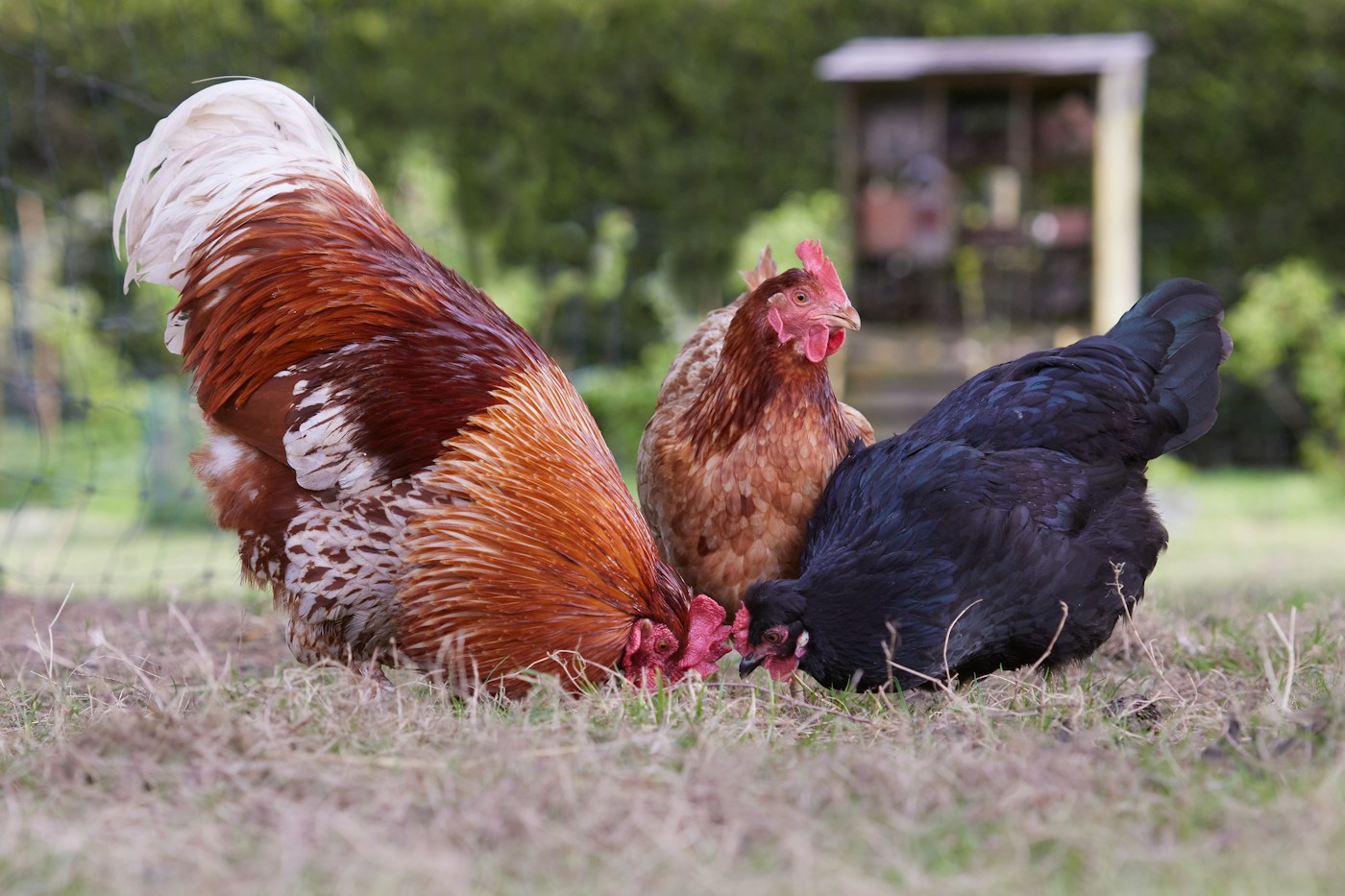
Layer-breed and dual-purpose chicks.
Hatch to about 6 weeks: chick starter.
Offer fresh chick starter as soon as chicks are placed in the brooder. Utah State University lists roughly 20–21% protein for layer and dual-purpose chicks during this period; the exact product directions should control. Use a feeder chicks can reach without climbing into it, and provide clean water continuously.
If the feed is medicated, read the active ingredient and label. A medicated starter is not a substitute for sanitation, dry litter, and correct brooder management.
About 6 weeks until laying: grower or developer.
Move pullets to a grower or developer ration formulated for immature chickens. USU’s guide lists approximately 15–19% protein depending on the type and stage. Do not rush pullets onto layer feed merely because older hens share the yard.
Transition over several days by mixing increasing amounts of the new ration into the old. Keep mixed-age birds separated at feeding time when necessary so each group receives the right feed.
Do not feed layer ration to chicks or growing pullets.
Layer feed contains calcium intended for birds producing shells. University Extension guidance warns that the excess calcium is inappropriate for birds not yet laying. Use a grower or all-flock product for the mixed group and offer calcium separately to active layers.
At the onset of lay: layer ration.
Switch when pullets begin laying or are clearly at point-of-lay, following the product label. Typical layer feeds are formulated with the protein, calcium, phosphorus, vitamins, and energy needed for production. Offer oyster shell or another poultry calcium source free-choice if your feeding program calls for it; birds consume it according to need.
Roosters and non-laying hens do not require a layer ration. In a permanent mixed flock, an appropriate all-flock feed plus separate calcium for laying hens can make management easier.
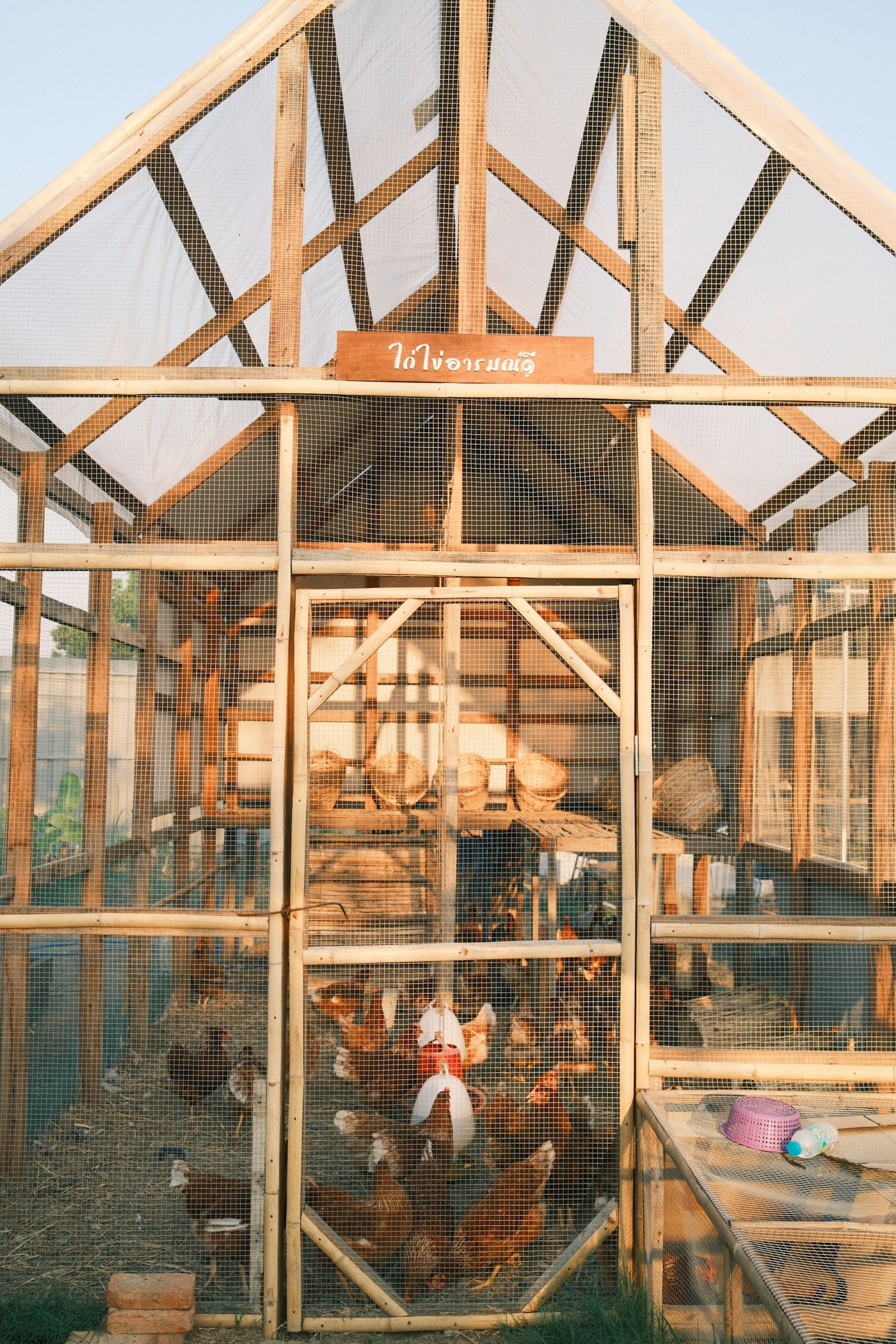
Meat birds follow a different schedule.
Fast-growing meat strains are commonly fed a higher-protein starter, then a grower and finisher selected for their growth stage. USU lists about 22–24% protein for 0–2 weeks, 20–21% for 2–4 weeks, and 18–20% from 4 weeks to market as a general guide. Follow the breeder and feed-manufacturer program for your strain; do not use a layer ration as a finisher.
How much feed?
Consumption changes with breed, body size, weather, production, waste, and the energy density of the feed. University of Minnesota Extension estimates that a six-pound laying hen may eat about three pounds weekly. Use this only as a planning figure: monitor body condition, spilled feed, and the flock’s actual intake.
Treats, grit, and supplements.
- Treats and scratch: keep them small enough that birds still consume their complete feed. Treats dilute the balanced ration.
- Grit: birds eating whole grains, fibrous plants, or pasture may need appropriately sized insoluble grit. Grit is not calcium.
- Oyster shell: a calcium source for active layers, offered separately when appropriate. It is not grit and should not be forced on immature birds.
- Kitchen scraps: introduce cautiously, avoid spoiled food, and follow local rules. Remove leftovers before they attract pests.
Keep feed fresh and available.
- Buy an amount the flock can use while it is fresh; USU recommends scheduling purchases at least every two months.
- Store bags in a cool, dry place inside a sealed, rodent-resistant container.
- Keep feeders protected from rain, wild birds, rodents, and droppings.
- Brush out stale material and discard any feed that is damp, moldy, rancid, or contaminated.
- Adjust the feeder near breast height and provide enough linear space for all birds to eat.
- Keep clean water available at all times; birds reduce feed intake when they cannot drink.
When to reassess the ration.
Check the feed label and seek veterinary or Extension help if you see poor growth, weight loss, feather picking, repeated thin shells, a sustained production drop, weakness, leg problems, or several birds changing at once. Nutrition is only one possible cause; parasites, disease, heat, water failure, lighting, crowding, and stress can look similar.
Research-based references
- Utah State University Extension: Basics for Raising Backyard Chickens
- Utah State University Extension: Principles of Feeding Small Flocks
- University of Minnesota Extension: Raising Layer Chicks and Pullets
- University of Minnesota Extension: Raising Chickens for Eggs
Protein percentages are general Extension guidelines. Follow the tag for a reputable complete feed formulated for your birds and consult a poultry nutritionist for custom rations.