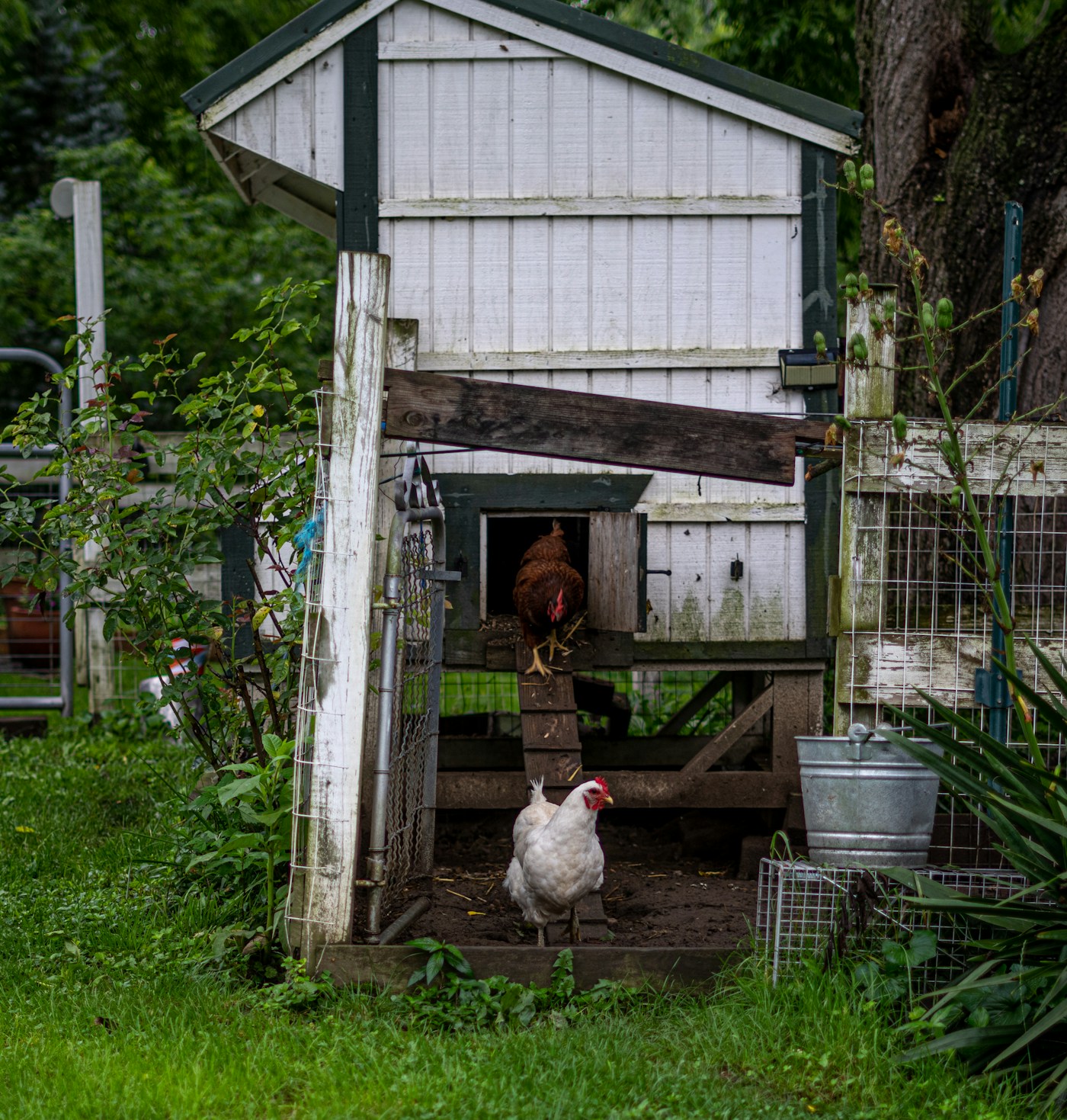
Use the smell test wisely.
A maintained coop may smell earthy, but a sharp ammonia odor means manure, moisture, or ventilation needs attention. Do not mask it with fragrance or pile dry bedding over a wet layer.
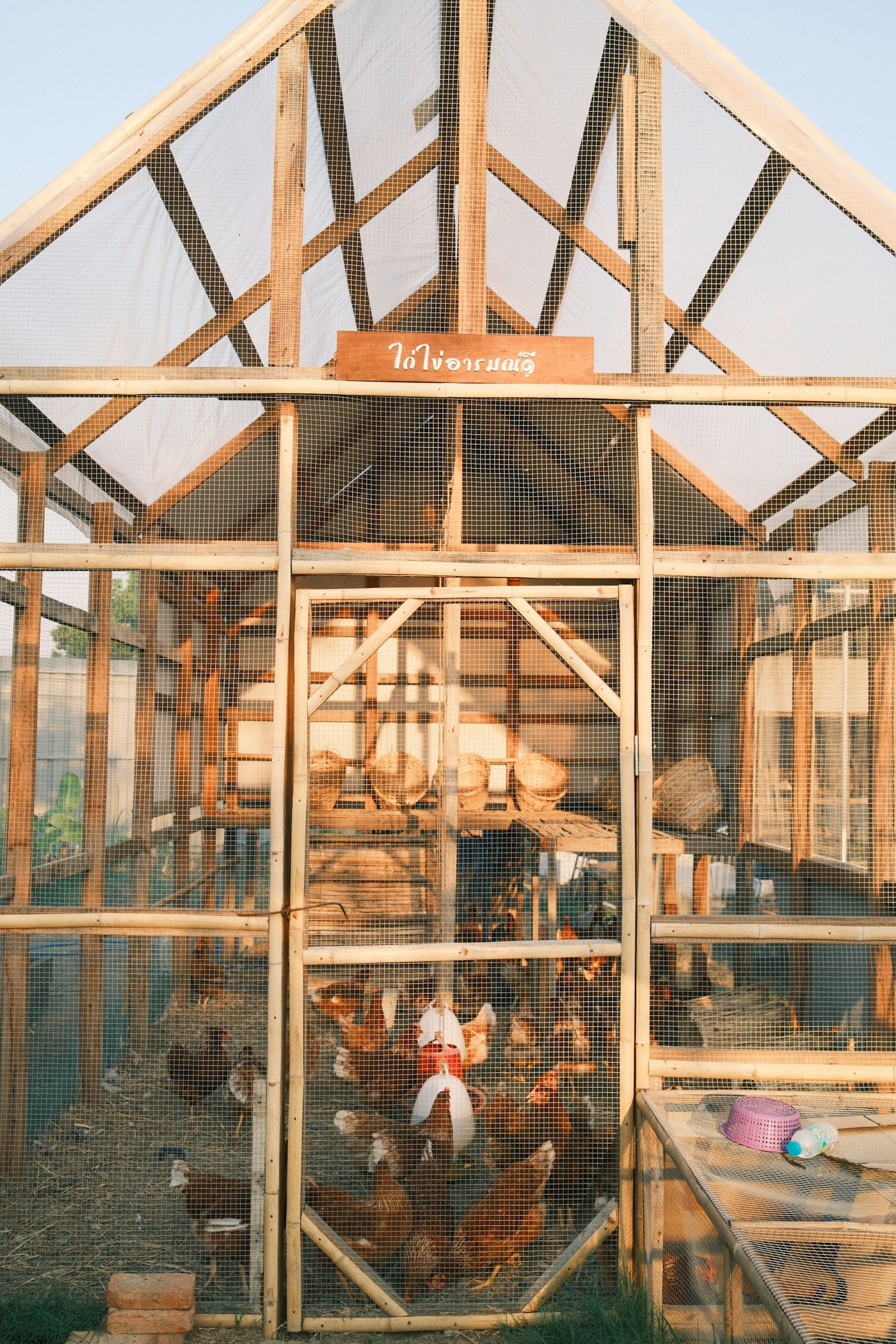
Daily spot cleaning.
- Collect eggs and remove broken shells and wet nesting material.
- Remove caked litter around drinkers and doors.
- Scrape fresh buildup from boards or heavily used roost areas.
- Remove spilled feed before it attracts pests.
- Verify bedding does not block ventilation.
Weekly reset.
- Move birds to a secure, shaded area if doors will remain open.
- Wear gloves, dedicated footwear, and respiratory protection appropriate for dust.
- Remove portable equipment; wash, rinse, sanitize, and dry it.
- Scrape roosts, boards, nest edges, and corners.
- Mist dusty surfaces lightly before disturbing them; do not create a manure-dust cloud.
- Remove wet or heavily soiled bedding and add clean, dry material.
- Inspect the floor, roof, wire, doors, latches, and pest signs.
Never mix cleaners.
Bleach combined with ammonia, acids, vinegar, or other products can release dangerous gas. Remove birds, clean away organic matter, use one product according to its label, ventilate, and let surfaces dry before birds return.

Seasonal or between-flock deep clean.
Choose dry weather. Remove birds, feed, water, tools, bedding, and manure. Dry-clean heavy debris first, then wash from upper surfaces toward the floor. Apply an approved disinfectant only after visible organic matter is gone. Observe contact time, rinse if directed, and dry completely before resetting.
Litter, manure, and biosecurity.
Healthy litter stays loose and dry enough not to cake. Repeated wet spots usually mean a leak, roof entry, condensation, crowding, or insufficient ventilation. Compost used litter only where local rules allow and manage runoff, odor, and flies.
- Use coop-only brushes, scrapers, boots, and gloves when practical.
- Clean young or healthy groups before sick or quarantined birds.
- Do not share uncleaned crates, tools, or egg flats between flocks.
- Wash hands after handling birds, eggs, litter, or equipment.
- Keep a simple cleaning and repair log.