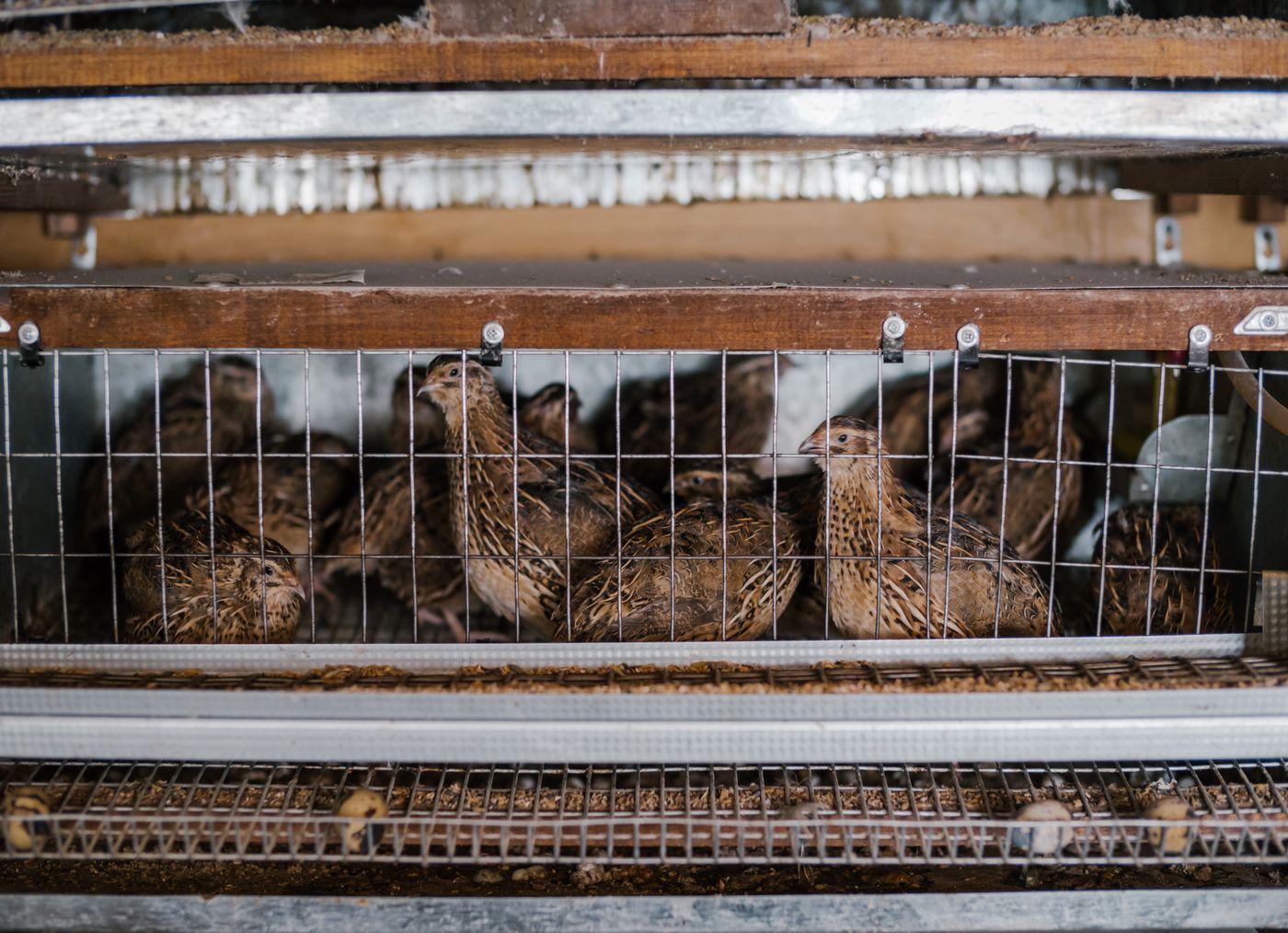
Never judge the system by the reservoir.
A full bottle or bucket does not prove that a cup, nipple, or line is delivering water. Air locks, frozen lines, debris, low pressure, or a stuck valve can leave birds thirsty while the reservoir looks full.
- Observe whether birds approach and drink normally.
- Touch every nipple or trigger every cup and watch the refill.
- Remove feed, manure, algae, and bedding.
- Scrub slippery surfaces with a dedicated brush, rinse, and refill.
- Check beneath the system for leaks and wet waste.
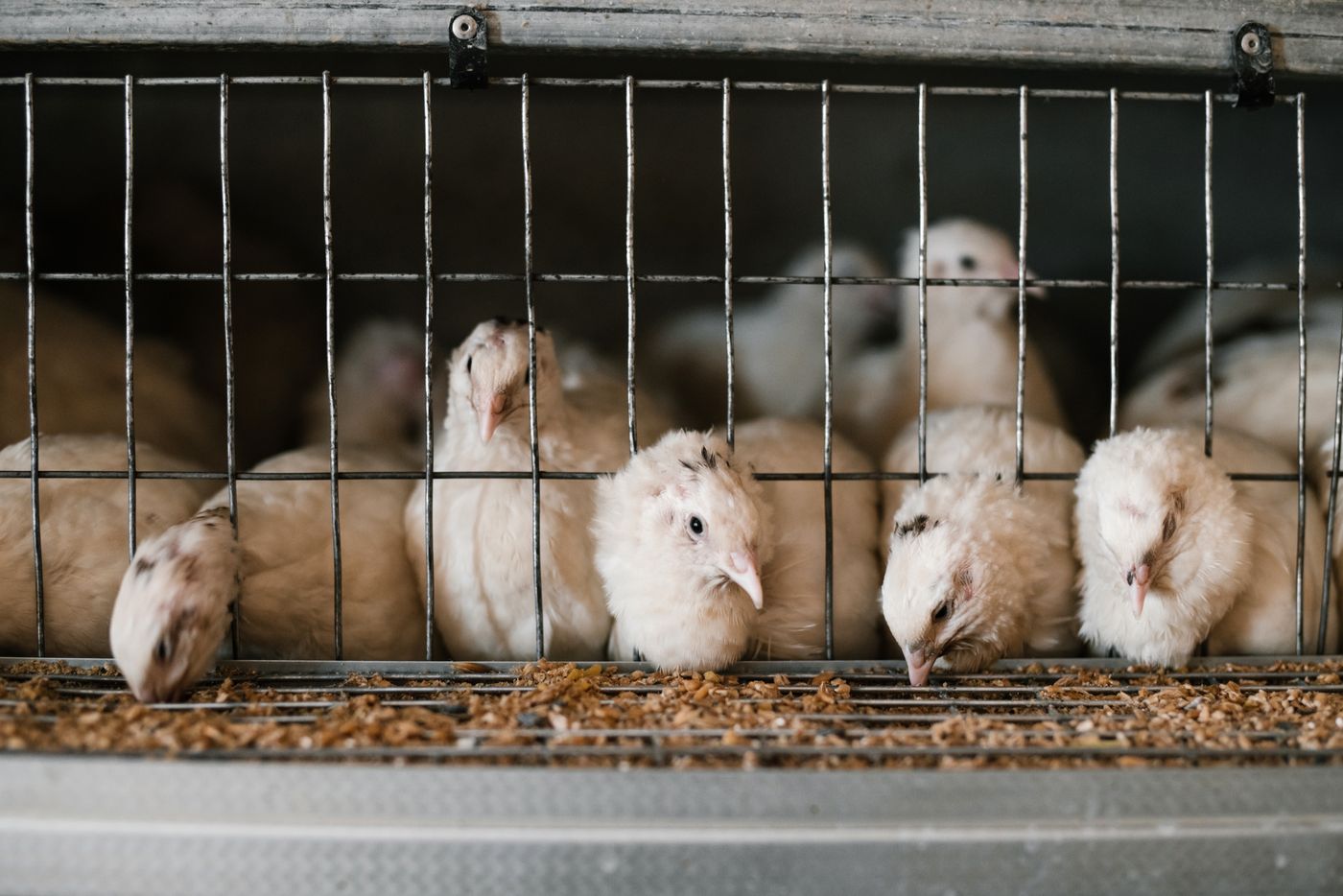
Newly hatched chicks.
Use a quail-chick-safe drinker that prevents entry and drowning. Clean pebbles or marbles can narrow the exposed channel, but the setup still requires close observation. Keep water easy to find, away from the hottest brooder point, and positioned so chicks do not become soaked and chilled.
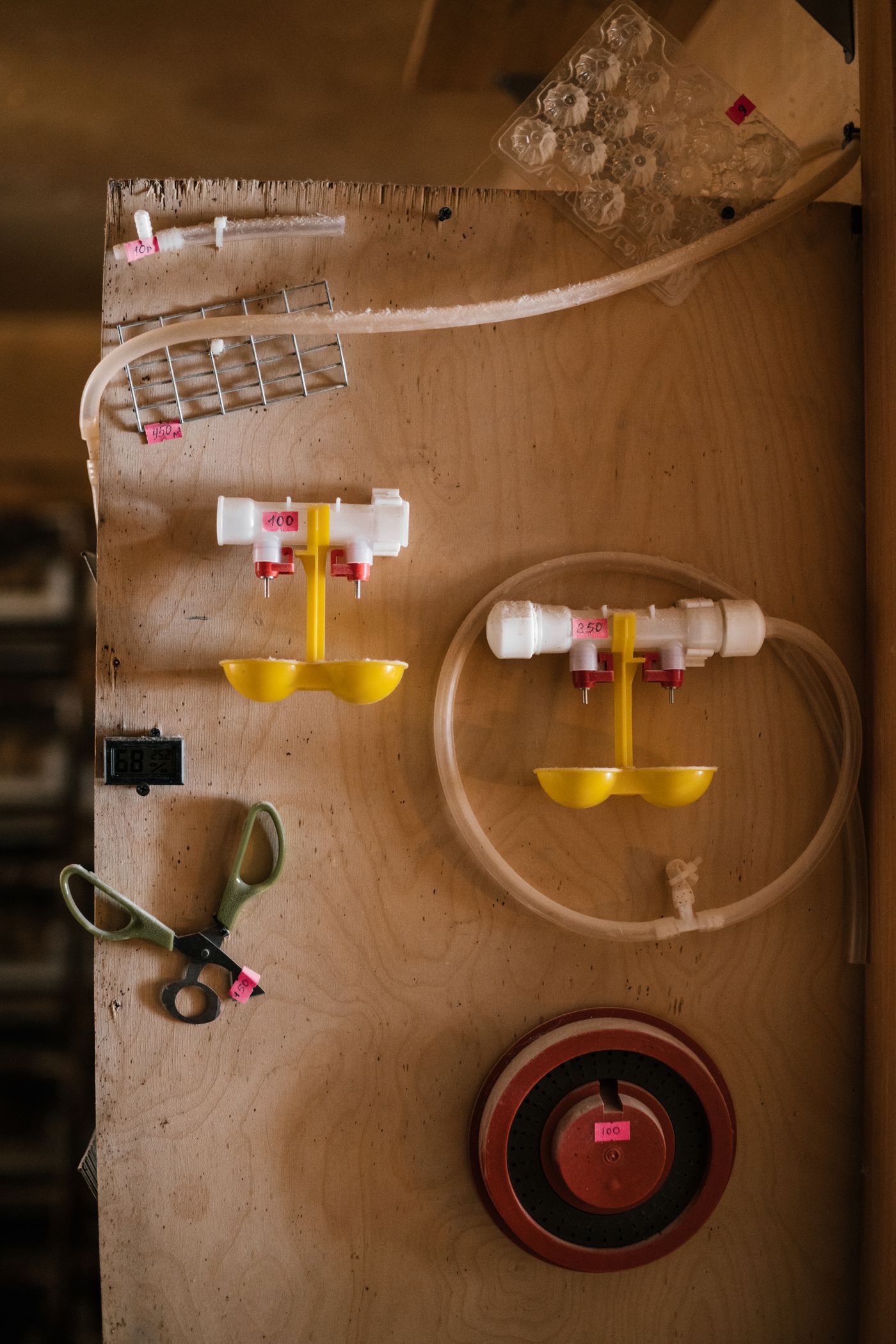
Adults: cups, nipples, or fountains.
- Nipples: reduce open-water contamination but need correct height, pressure, and daily testing.
- Cups: are visible but collect feed and manure; empty and scrub them often.
- Fountains: should sit on a stable raised surface and be cleaned daily.
- Multiple points: prevent one bird from controlling access and add backup during a failure.
Act now when access changes.
Rapid weakness, closed eyes, panting, crowding, reduced feeding, or a sudden production drop can follow a water problem. Restore safe water immediately and contact an avian veterinarian for severe signs.
Heat, cold, and position.
Keep reservoirs shaded and check more frequently in heat. Mississippi State Extension notes that water that becomes too hot or cold may be refused. During freezes, test the actual nipple or cup. Adjust height so birds drink comfortably without soaking their bodies or trays.
Clean, then sanitize.
Biofilm protects microorganisms, so physical scrubbing comes first. Wash removable parts, rinse, then use a poultry-safe sanitizer at the label rate. Flush lines according to the manufacturer. Do not combine cleaners or guess at continuous water treatments.
Weekly maintenance.
- Disassemble bottles, cups, valves, and fittings.
- Scrub threads, corners, seams, and lids.
- Flush lines and verify flow at the farthest point.
- Repair leaks and replace worn seals.
- Clean the platform, tray, or floor below the drinker.
- Protect stored water from rodents and wild birds.