Match the routine to the housing.
A tray system concentrates waste below the birds; a solid-floor pen mixes manure with litter. Both need dry surfaces, working ventilation, clean equipment, and a schedule based on bird density and moisture—not a fixed calendar alone.
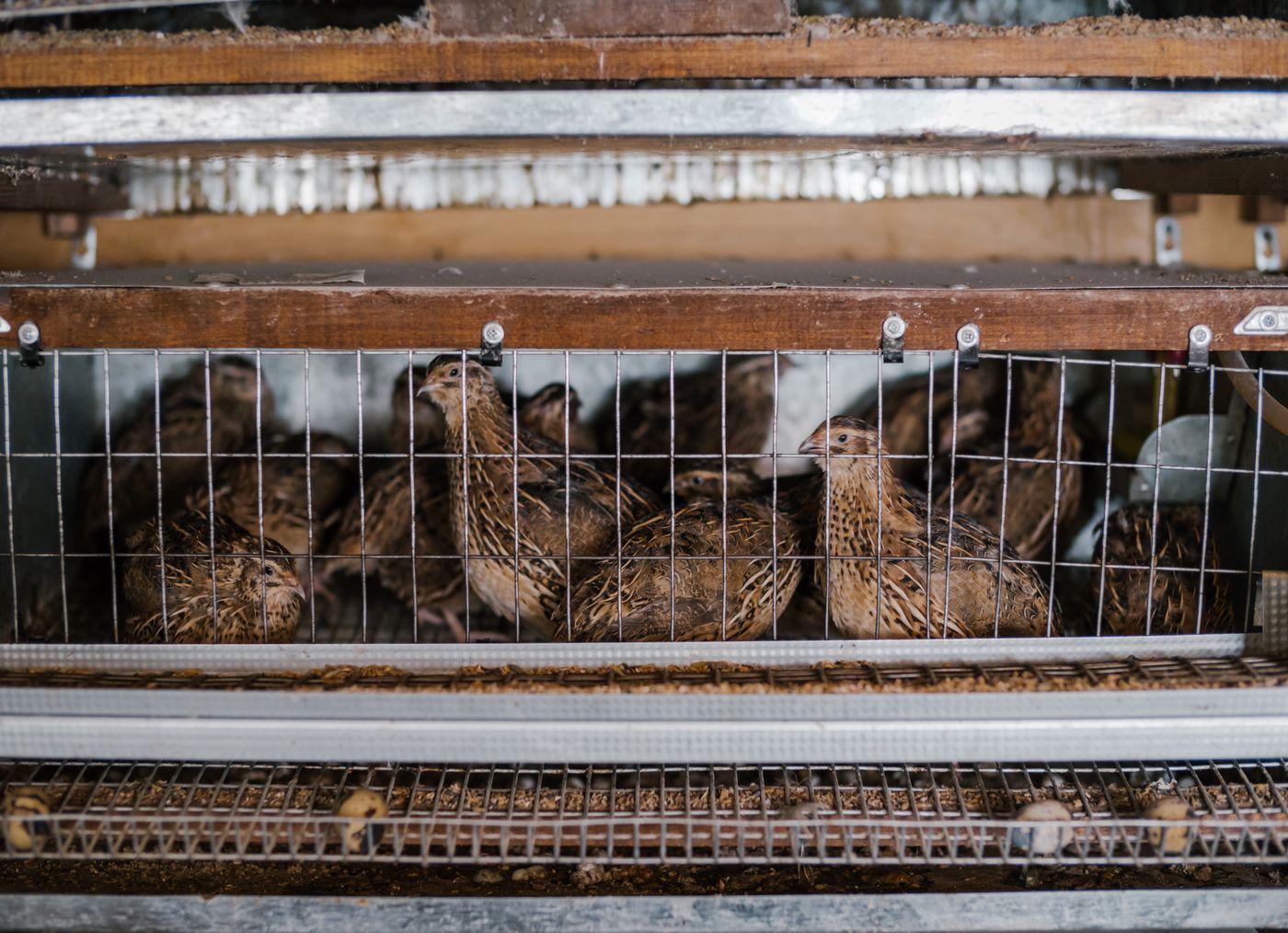
Daily spot clean.
- Collect eggs and remove cracked eggs and wet feed.
- Scrape manure from resting boards, ramps, and crowded corners.
- Remove wet litter or tray material beneath drinkers.
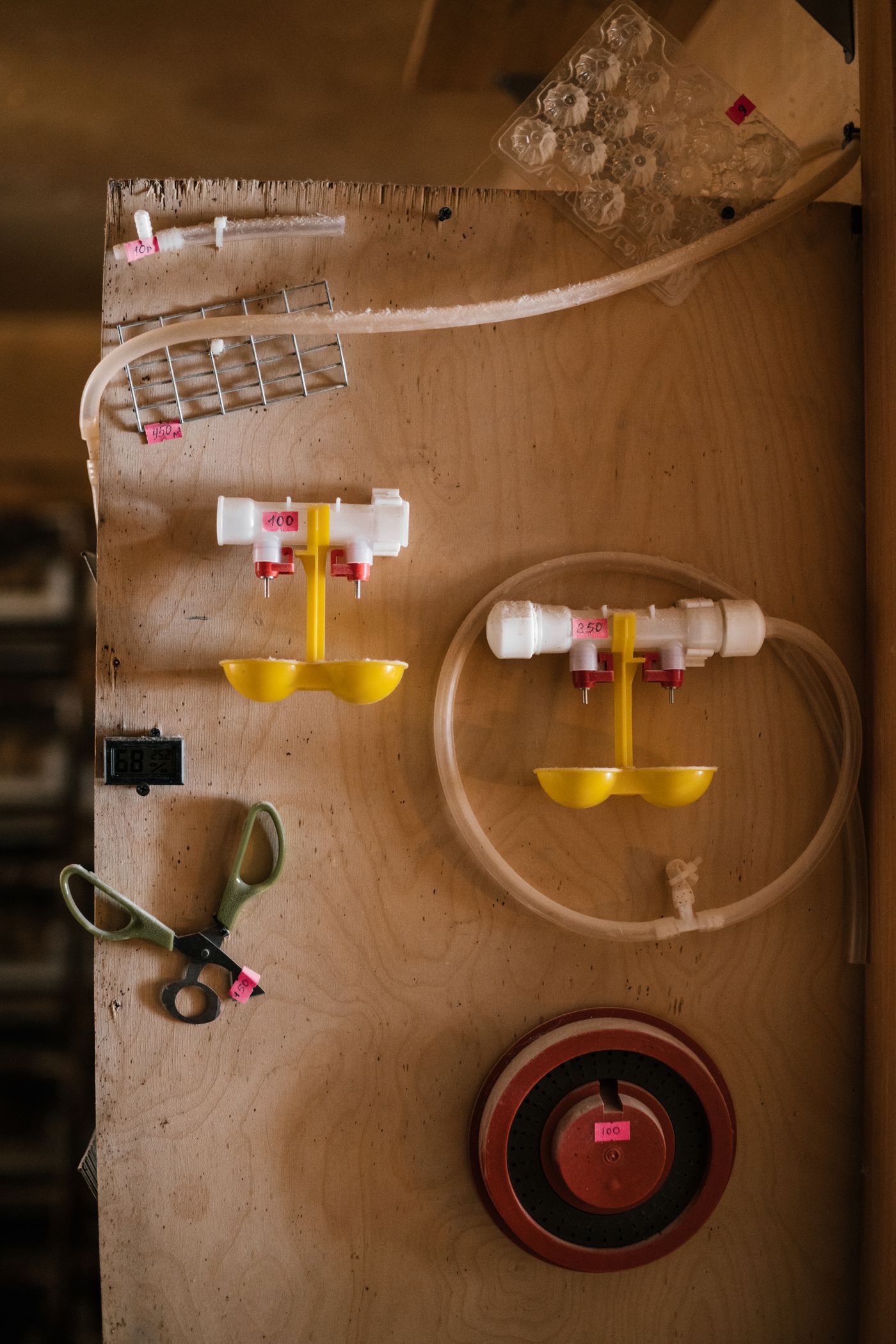
- Clear feeder guards, cups, and nipples.
- Check for sharp wire, trapped toes, damaged fasteners, and escape gaps.
- Act when you smell sharp ammonia.
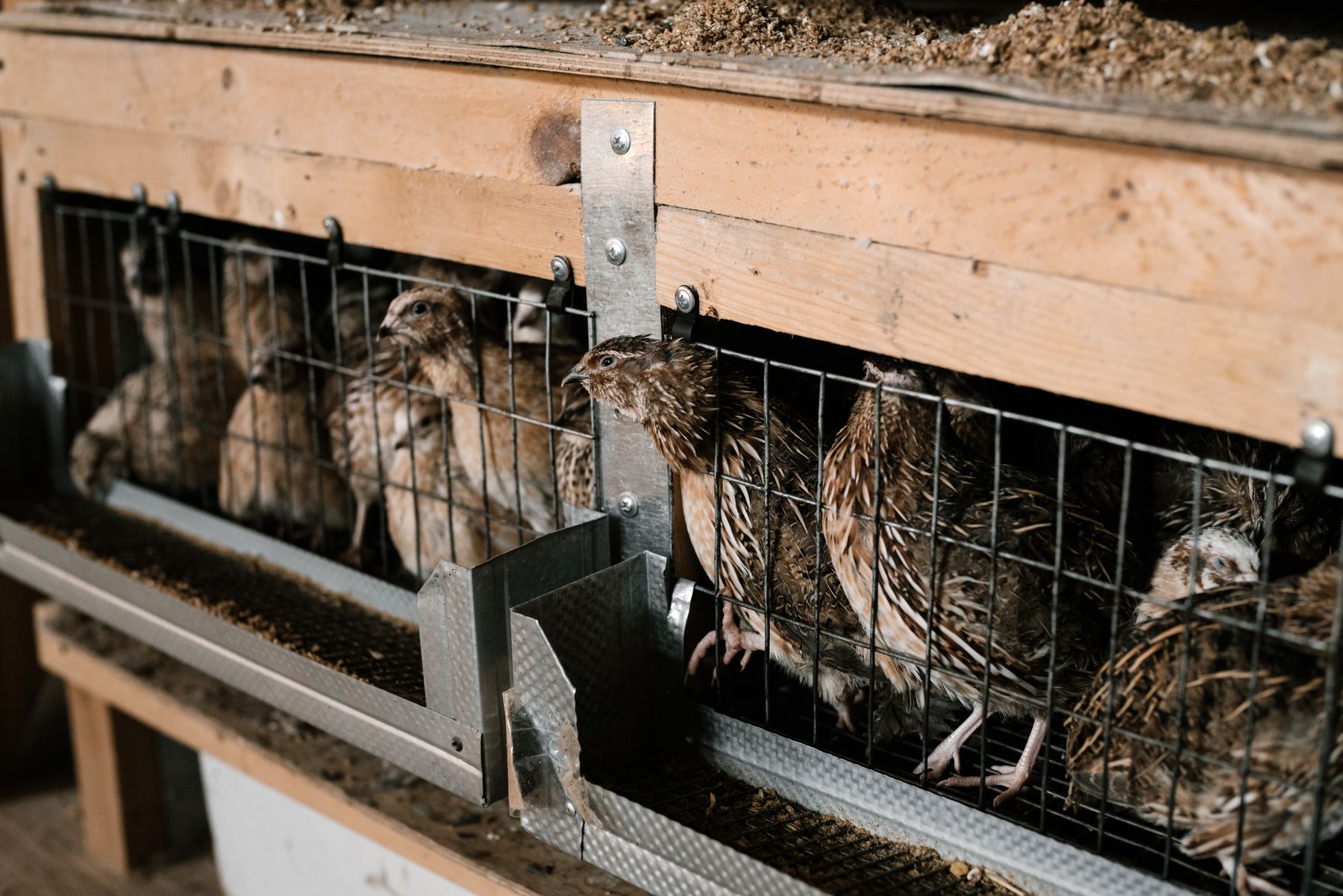
Droppings trays.
- Count birds and close the enclosure before moving a tray.
- Slide slowly so vibration does not panic or trap birds.
- Empty before waste becomes wet, heavy, or touches the wire.
- Scrape, wash when needed, rinse, and dry.
- Return the tray fully seated without creating a gap.
Solid-floor and litter pens.
Remove caked and wet sections, turn dry loose litter where appropriate, and add clean material only after correcting the moisture source. Refresh dust baths before they become manure boxes. Inspect shelters for condensation and keep airflow fresh without a harsh draft.
Dust and disinfectants can harm birds and people.
Move quail to a secure holding enclosure for dusty or wet deep cleaning. Wear appropriate respiratory protection, dampen dusty waste lightly, ventilate, and never mix cleaners. Allow surfaces to dry before birds return.
Weekly enclosure reset.
- Prepare a secure catch box or secondary enclosure.
- Remove and wash feeders, waterers, and shelters.
- Empty trays or litter and contain waste.
- Scrape manure from wire, walls, corners, and frames.
- Wash and, when appropriate, disinfect cleaned surfaces.
- Dry thoroughly; moisture left in seams restarts the problem.
- Repair doors, wire, latches, roof, and predator barriers.
- Replace clean equipment, dust-bath material, and dry litter.
Waste and biosecurity.
- Store waste where runoff, pets, rodents, and wild birds cannot spread it back.
- Compost only with proper heat, moisture, aeration, and local-rule compliance.
- Clean healthy and younger groups before sick or quarantined birds.
- Use separate tools or clean them between enclosures.
- Wash hands and clean footwear after the bird area.
- Record unusual manure, parasites, wet spots, and repairs.
Research-based references
- Penn State Extension: Small-scale Poultry Housing
- Penn State Extension: Poultry Air Quality and Wet Litter
- USDA APHIS: Defend the Flock Biosecurity Workbook
Commercial enclosures pictured are illustrative. Use a species-appropriate backyard design with safe headroom and escape prevention.