Collection starts before the door opens.
Quail eggs can hide in litter, corners, shelters, sand baths, and beneath equipment. Quail can also launch through an open door. Count birds, locate eggs through the wire when possible, and plan each hand movement before opening the enclosure.

Collection, step by step.
Secure the enclosure and count.
Close room doors, gates, and adjacent cage openings. Confirm the number of birds. In front-opening cages, block the opening with your body or a temporary panel while working.
Scan every laying area.
Check the usual corner, shelters, dust bath, feeder edges, tray lips, and beneath low furnishings. On litter, move material gently rather than raking deeply where eggs may be buried.
Lift each egg with fingertips.
Do not squeeze several eggs in one hand. Place eggs in a shallow quail flat or padded container so they cannot roll, pile up, or be crushed by equipment.
Inspect shell and surface.
Look closely for hairline cracks hidden by speckling, leaking contents, soft shells, and heavy manure. Keep rejects away from sound eggs.
Recount, close, and record.
Before walking away, recount the birds, verify every latch, and check that no bird is trapped behind a feeder or shelter. Record the number collected and refrigerate eating eggs promptly.
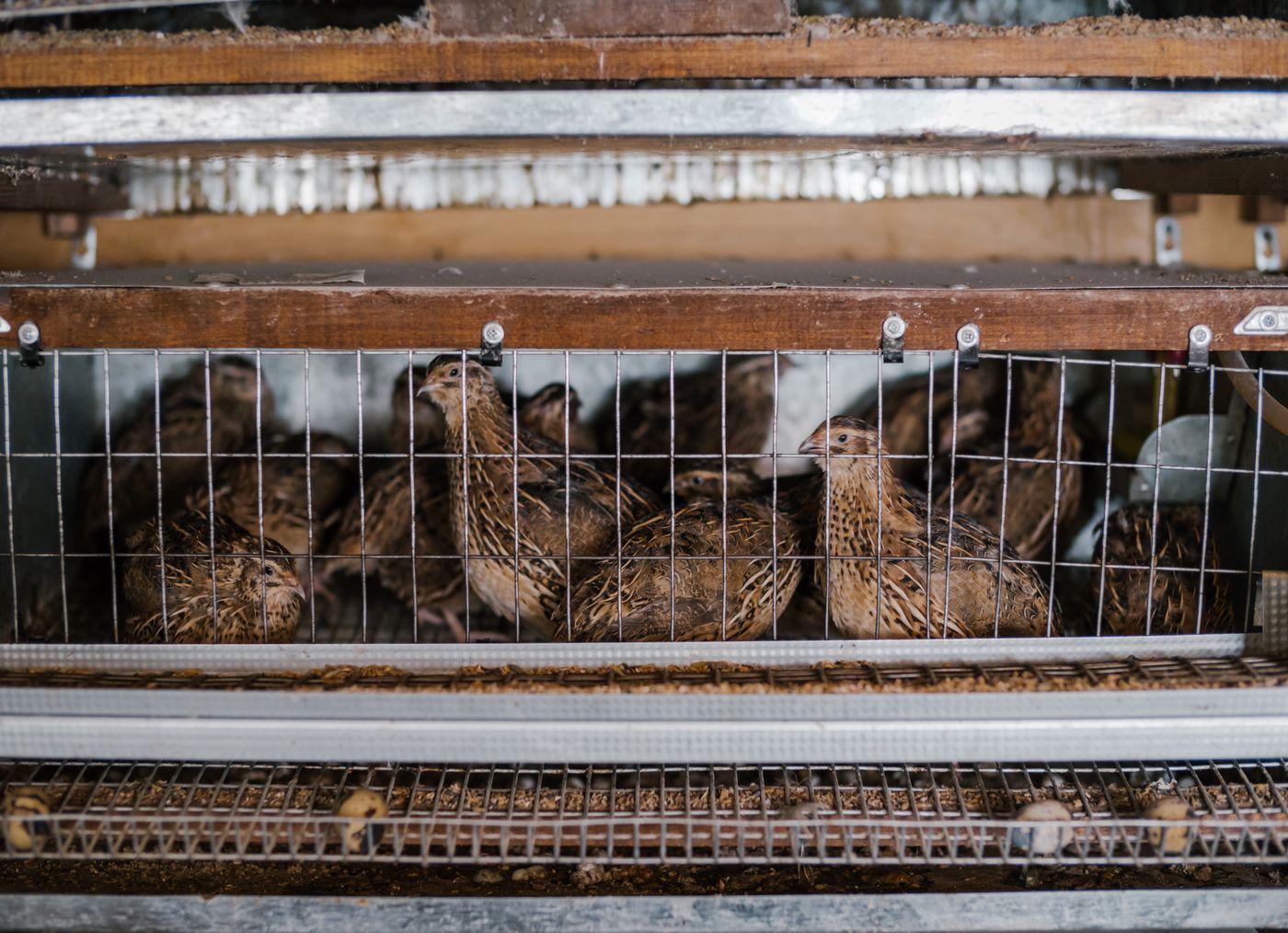
Make the enclosure work with you.
- Use a slight, safe egg-roll floor only when the design protects toes, prevents escape, and catches eggs gently.
- In floor pens, provide a predictable sheltered laying area without creating a trap where birds can pile.
- Keep litter and dust baths dry so eggs do not become coated in wet manure.
- Position feeders and waterers so eggs cannot roll underneath inaccessible hardware.
- Add multiple easy-access areas when crowding around a preferred corner causes cracks.
When to collect more often.
Add checks during
- Freezing or very hot weather
- Peak laying
- Heavy floor traffic
- Egg pecking
- New group introductions
- Predator or rodent activity
Quail eggs are small and change temperature quickly. Frequent collection reduces cracks, dirt, hidden-egg buildup, and the chance that birds learn to peck broken eggs.
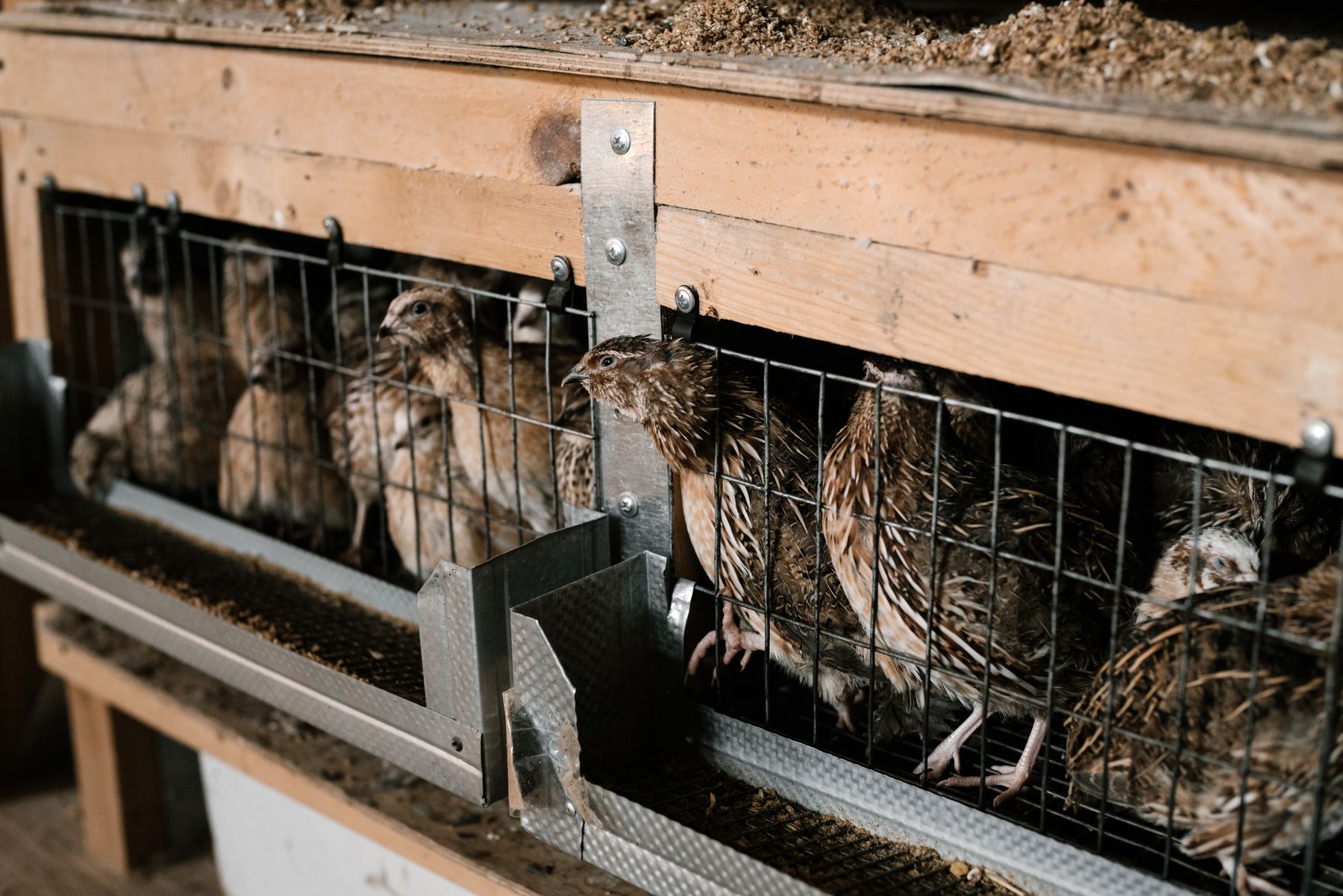
Damaged and unusual eggs.
Discard cracked or leaking eggs.
Remove broken contents and contaminated litter immediately. Do not mix damaged eggs with clean eggs or return raw broken eggs to the flock.
Track repeated soft shells, rough shells, very small eggs, heavy soiling, or a sudden pen-wide drop. Review complete feed, calcium access for laying hens, water flow, heat, lighting, aggression, and health. Contact an avian veterinarian or Extension specialist when abnormalities persist.
Separate eating eggs from hatching eggs.
Label collection containers before you begin. Eggs intended for incubation need different selection and storage than eating eggs, including careful temperature management and short storage. Do not refrigerate hatching eggs with eating eggs; follow the incubation-selection guide.