Quiet observation comes first.
Quail often conceal weakness until they are significantly ill. Before opening a door, sliding out a tray, or reaching into the enclosure, watch the group. Learn what normal feeding, dust bathing, resting, and vocalizing look like for your flock.
Daily checklist
- Observe quietly before opening
- Count every quail
- Provide fresh, clean water
- Check dry, stage-appropriate feed
- Collect eggs
- Remove wet feed and waste
- Inspect feet, head, and feathers
- Secure every door and opening
The morning visit, step by step.
Count first, then open carefully.
Quail can flush upward or dart through a small gap. Confirm where the birds are before opening the enclosure, and block the opening with your body or a secondary barrier. Open doors slowly and keep tools within reach so the enclosure is not left unsecured.
Look for a bird that remains flattened, sits with eyes closed, separates from the group, has ruffled feathers, or does not move toward food and water.
Check water flow and cleanliness.
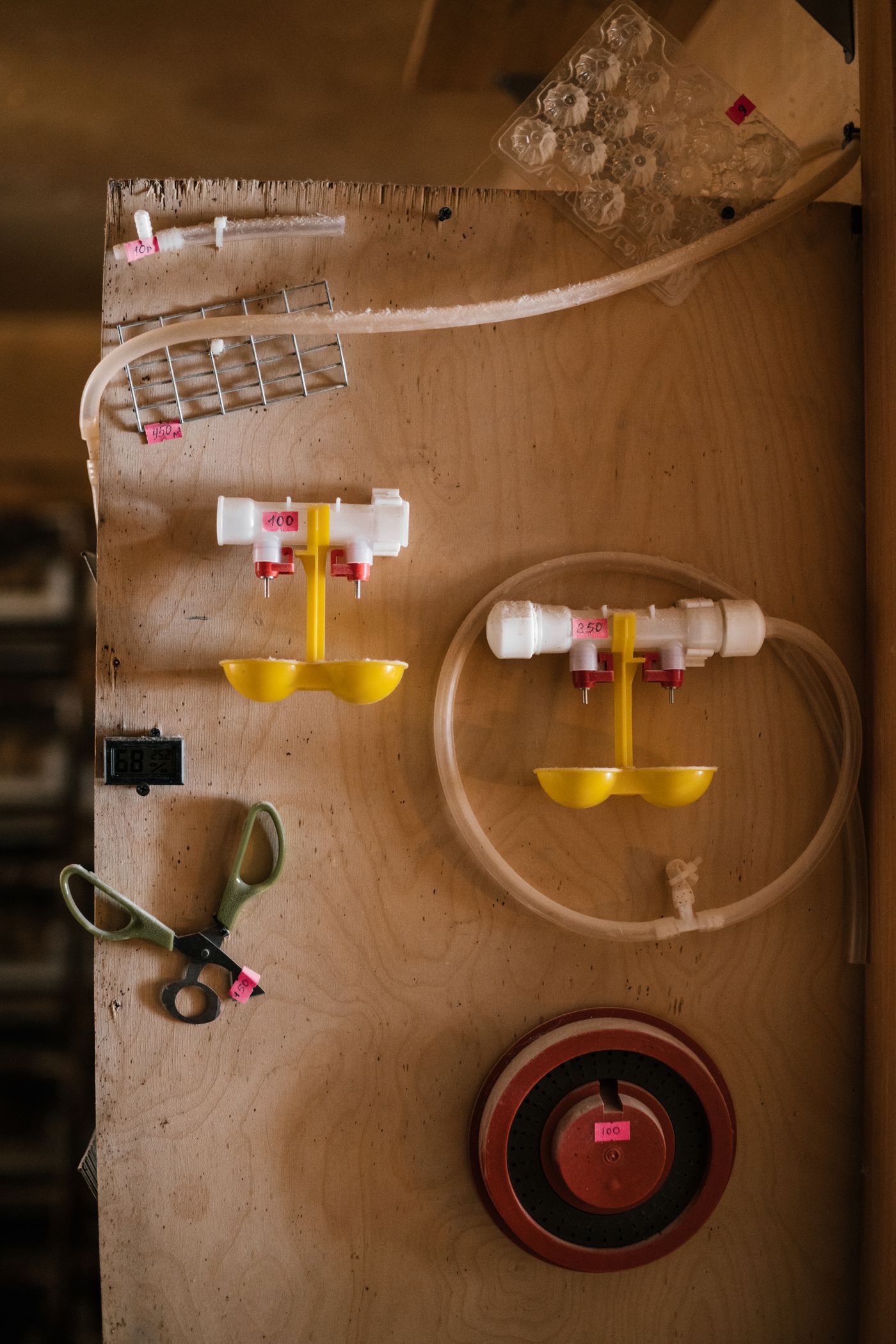
Quail need continuous access to clean water. With nipple or cup systems, touch each drinker to confirm water is actually flowing. With open waterers, remove bedding, droppings, and algae and refill with fresh water.
Place water so birds can drink comfortably without soaking the bedding or droppings tray. In hot weather, check more frequently and keep the enclosure shaded and well ventilated. In winter, verify that lines, cups, and nipples have not frozen.
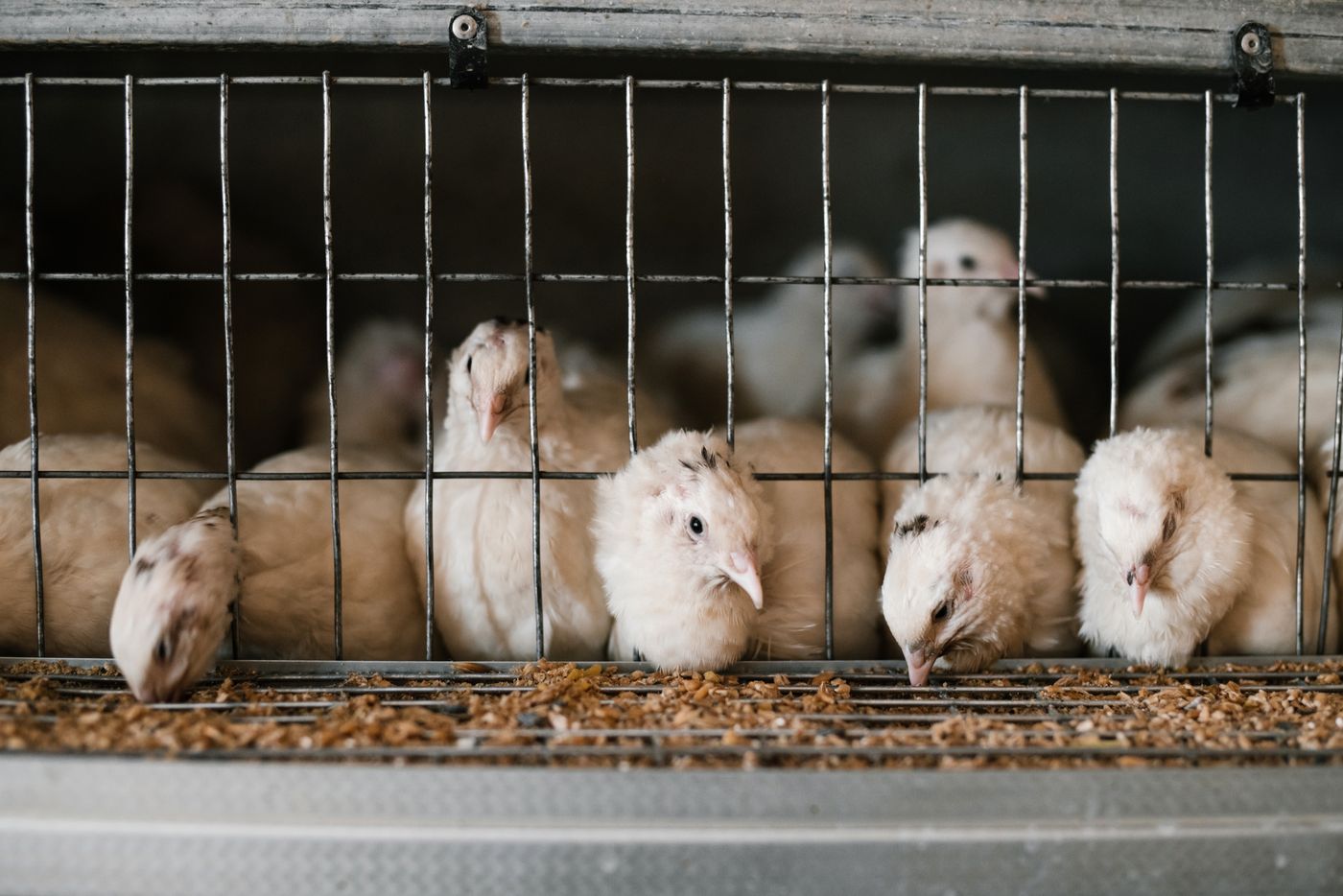
Provide the correct feed for the bird’s stage.
Use a complete game-bird or quail ration formulated for the birds’ age and purpose. Chicks, growing birds, meat birds, and laying or breeding adults do not all need the same ration. Do not assume chicken feed is an equal substitute.
Break up bridging in gravity feeders, remove damp clumps, and discard moldy feed. Mississippi State University Extension warns that moldy feed can kill quail. Store feed dry, cool, and protected from rodents and wild birds.
Collect eggs and inspect the collection area.
Collect eggs at least once daily. In rollout systems, remove eggs before they are cracked or contaminated and clear any obstruction that prevents them from rolling safely. In floor or litter systems, check corners, shelters, and dust-bath areas.
Note sudden changes in production, shell quality, or the number of broken eggs. These changes can be related to lighting, age, stress, nutrition, temperature, crowding, or illness.
Remove moisture and manure buildup.
Pull droppings trays before they become wet, heavy, or strongly odorous. Remove spilled water and wet feed immediately. Ammonia odor means the enclosure needs better manure management and ventilation, not perfume or more bedding placed over the problem.
Check wire floors, solid resting areas, corners, and door edges for sharp points or places where toes, wings, or heads can become trapped. Quail benefit from dry footing and a clean, species-appropriate dust bath.
Scan every bird for small changes.
Watch each quail stand, walk, eat, and drink. Then inspect any bird that looks different from the group.
- Eyes and nostrils: clear and open, without swelling or discharge.
- Breathing: quiet and easy, without wheezing, gasping, or tail bobbing.
- Head and back: no fresh blood, missing skin, or repeated pecking injuries.
- Feet and legs: no limping, curled toes, swelling, sores, or entanglement.
- Feathers and body: no sudden puffing, severe feather loss, or sharp loss of breast muscle.
- Vent and droppings: vent not pasted shut; droppings within the bird’s normal range.
- Behavior: responsive, balanced, and able to reach feed and water without being driven away.
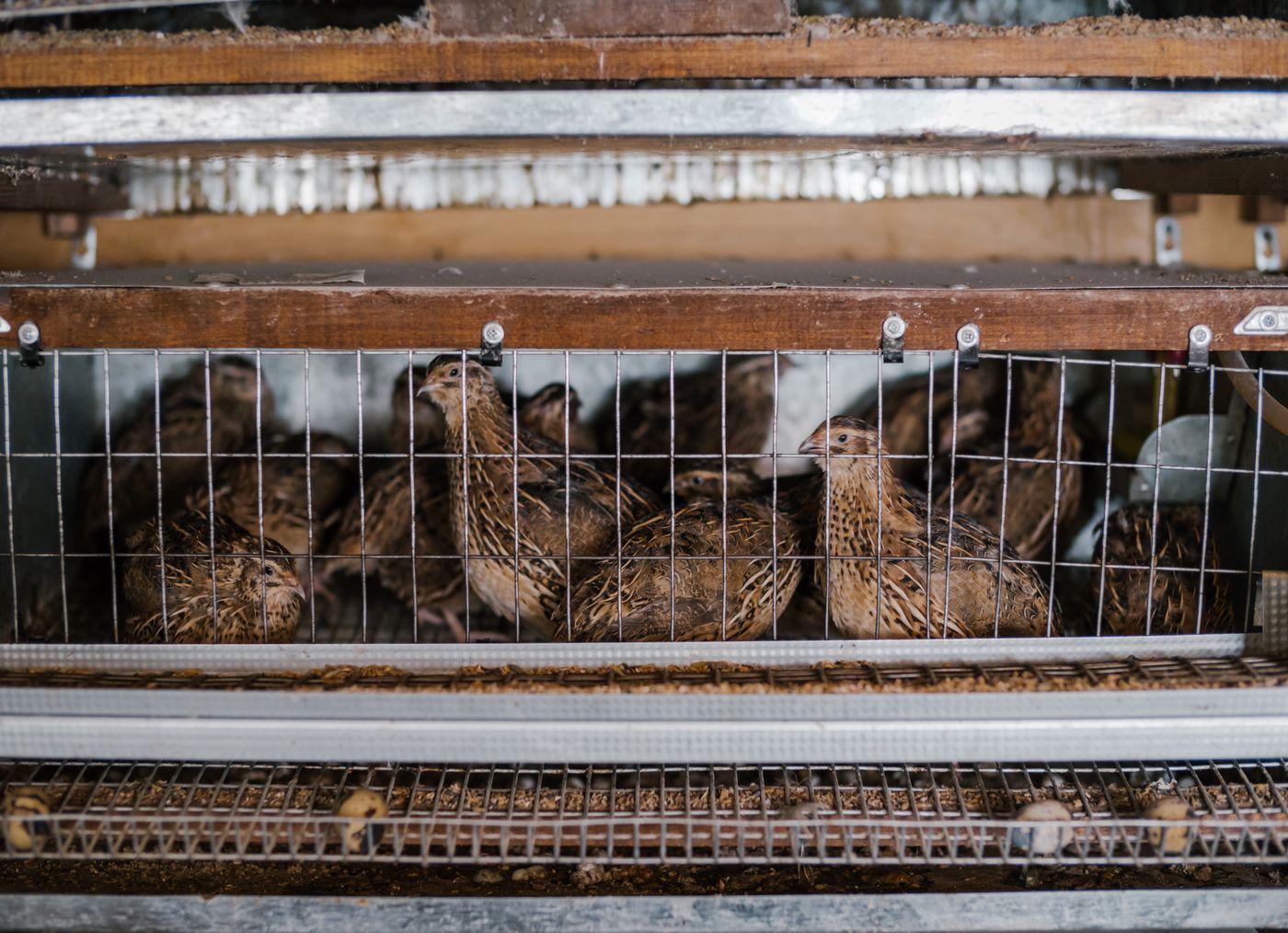
Separate and seek help promptly.
- Open-mouth breathing outside of heat stress, severe weakness, or inability to stand
- Active bleeding, scalp or eye injury, repeated attacks, or suspected predator damage
- Bloody droppings, rapid weight loss, a pasted vent, or refusal to eat and drink
- Several birds sick at once, sudden egg-production collapse, or unexpected deaths
Move the affected bird to a quiet, secure hospital enclosure with appropriate heat, feed, and water. Contact an avian veterinarian or Extension poultry specialist. Do not give antibiotics or medicated feed without species-appropriate professional guidance and attention to egg or meat withdrawal requirements.
The evening closeout.
- Collect remaining eggs and remove cracked eggs.
- Count the flock and confirm that no bird is caught under a feeder, tray, shelter, or door.
- Test the water system again and verify that feed remains dry.
- Secure doors, lids, and service openings. Check for gaps created by shifting wire or loose fasteners.
- Confirm the enclosure has safe airflow, weather protection, and no new predator damage.
Weekly care
- Wash feeders and drinkers thoroughly
- Empty and scrub droppings trays
- Refresh dust-bath material
- Inspect feet, breast condition, and vents
- Check for mites and external parasites
- Inspect wire, fasteners, doors, and roof
- Review feed use and egg count
- Clean dedicated tools and footwear
Common mistakes to avoid.
- Assuming a full reservoir means the drinker works.
- Using chicken layer feed as the default ration for all quail.
- Allowing wet feed, mold, or manure buildup to remain.
- Opening a door without first locating every bird.
- Ignoring minor head or back injuries that can attract more pecking.
- Overcrowding or leaving too little feeder and water space for every bird to use the system.
- Changing feed, lighting, housing, or flock groups abruptly when a gradual transition is possible.
Research-based references
This guide focuses on domestic Coturnix quail. Bobwhite and other game-bird species may have different housing, feeding, licensing, and release requirements.
- Mississippi State University Extension: Feeding Quail
- Mississippi State University Extension: Quail feeding programs
- Penn State Extension: Small-scale poultry housing
- University of Minnesota Extension: Raising game birds
Stock photographs are illustrative. Commercial housing pictured may not represent the backyard housing recommendations in the text.