Quail are not miniature chickens.
Their nutrient needs and timeline differ. Mississippi State University Extension lists a 24% protein starter for Coturnix from hatch through about six weeks, followed by either an 18% finisher for meat birds or an 18% layer ration with higher calcium for laying birds. Use those figures as a guide and follow the complete-feed label available in your area.
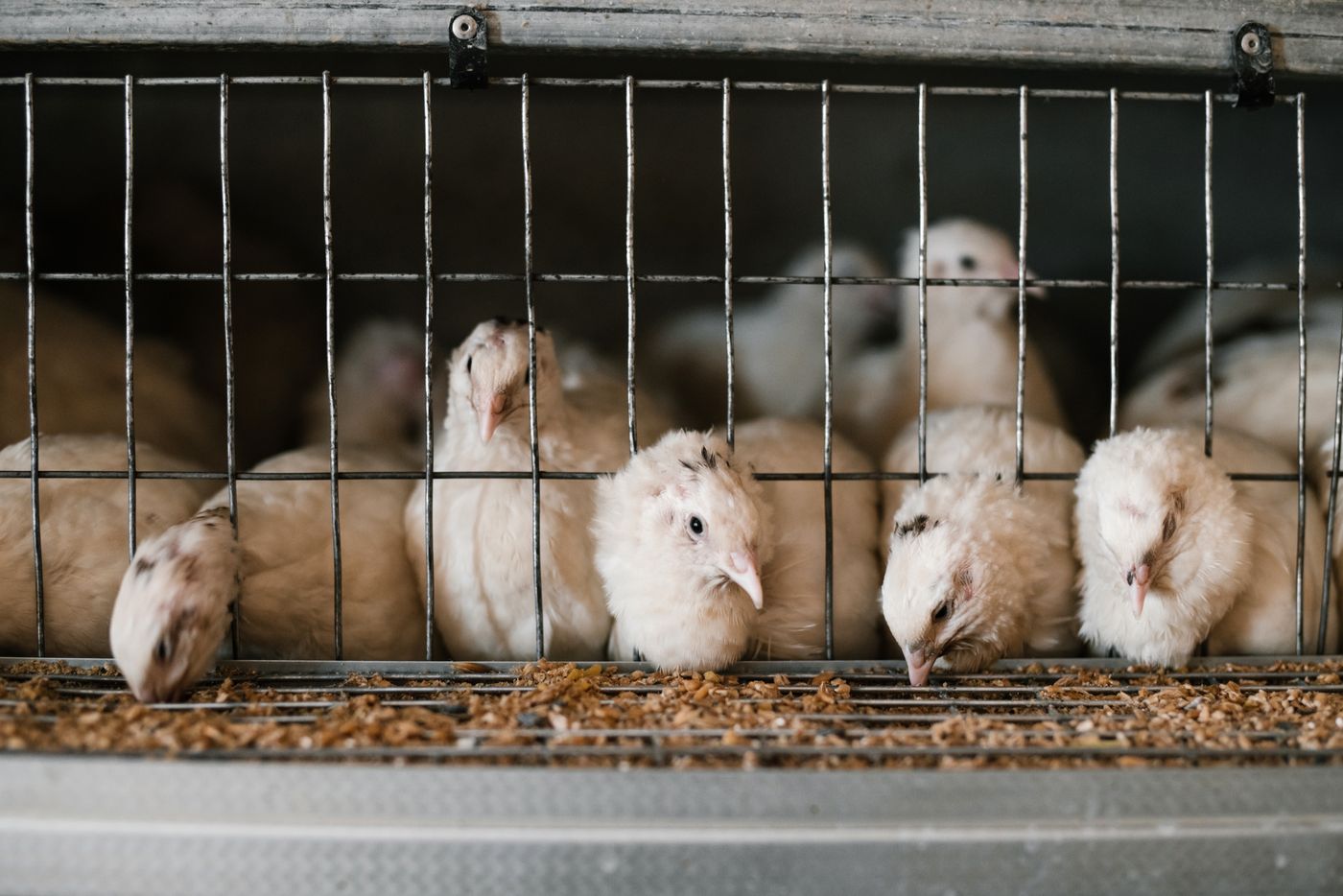
Hatch to about 6 weeks: starter.
Offer a complete game-bird or quail starter immediately after hatch. Coturnix grow rapidly and need a finely textured feed that they can pick up. If crumbles are too coarse for new chicks, crush them to a safe, consistent size rather than diluting the ration with grain.
Use shallow chick feeders or guarded troughs. Keep feed close to the brooder’s comfort zone but away from spilled water and the hottest point. Make sure chicks can find water before they begin eating, and use a quail-safe drinker that prevents drowning or chilling.
Around 6 weeks: choose the bird’s purpose.
Meat birds: move to a Coturnix finisher and continue it until processing, following the product label. Future layers or breeders: move to a ration intended for laying/breeding Coturnix when egg production approaches or begins. Coturnix can mature and begin laying as early as six to eight weeks.
Do not assume a bobwhite schedule or a generic chicken ration is identical. Quail formulas, availability, and labels differ, so confirm the species and life stage on the tag.
Chicken layer feed is not automatically a quail layer feed.
It may not provide the protein, amino-acid balance, or nutrient density your quail require. Select a complete ration labeled for quail or game birds and the correct production stage. If only limited products are available, ask an Extension poultry specialist or avian veterinarian to evaluate the tag.
Laying and breeding adults: layer/breeder ration.
Active layers need a ration designed for production, including the calcium required for shells. Mississippi State’s Coturnix table lists 18% protein and 2.75% calcium as minimum guideline values for a layer ration. The complete feed should provide the balanced nutrients; adding grain or multiple supplements can unbalance it.
If males and females live together, use the quail breeder/layer program recommended for that flock. Observe shell quality, body condition, fertility, and feed intake rather than increasing supplements automatically.
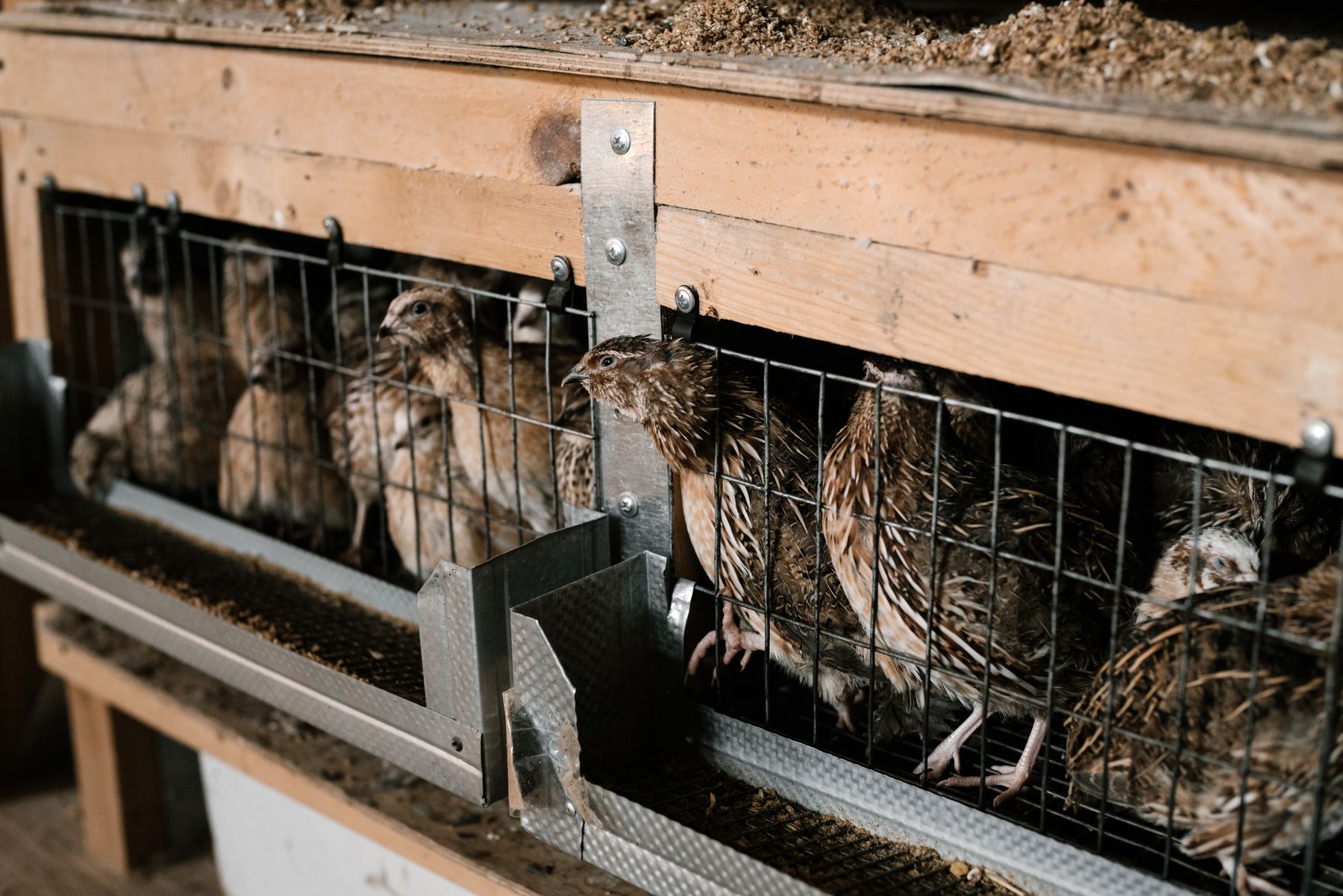
Make every mouthful count.
- Do not dilute complete feed. Extra grain and excessive treats lower the nutrient concentration of the total diet.
- Keep texture usable. New chicks need particles they can swallow; adults waste excessive powder and oversize pieces.
- Prevent selection. Do not allow birds to eat only favorite particles from a homemade mix.
- Provide continuous water. A blocked nipple or empty cup quickly reduces feed intake and can become an emergency.
- Protect feed. Keep it cool, dry, and sealed from rodents, insects, and wild birds.
Changing feeds without a setback.
When a transition is appropriate, mix the feeds over several days unless the label or a veterinarian directs otherwise. Watch droppings, appetite, weight, behavior, and egg production. Make one management change at a time when possible so you can identify the cause of a problem.
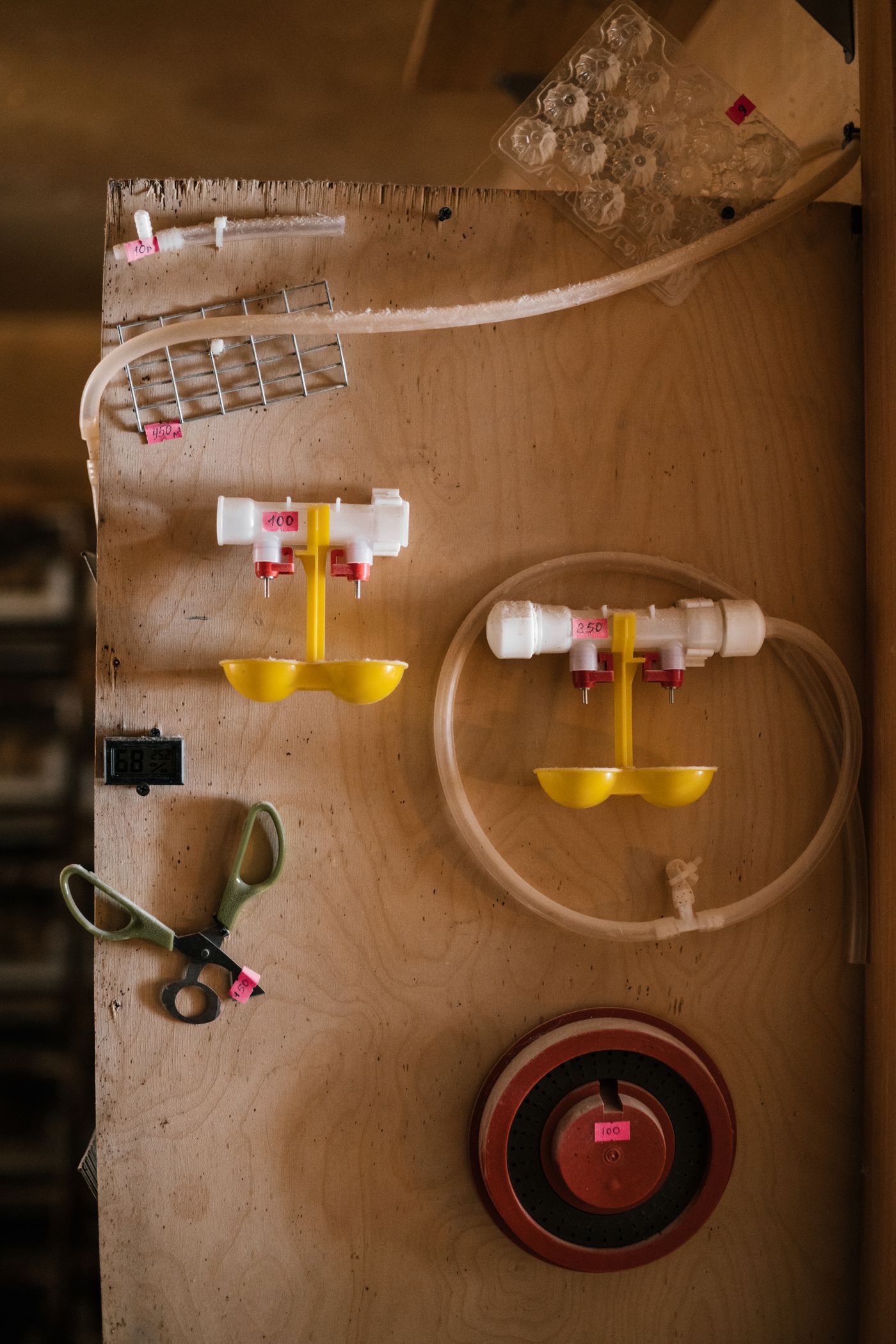
Feeder setup matters.
- Keep the feed lip at a comfortable height and use guards that reduce billing-out without trapping heads.
- Provide more than one feeding point if timid birds are excluded.
- Break up bridging in gravity feeders every day; a full hopper can stop delivering feed.
- Remove damp clumps and discard moldy feed immediately. Mississippi State Extension warns that moldy feed can kill quail.
- Clean spills before they attract rodents or wild birds.
- Weigh a sample of birds regularly if you are raising for meat or breeding.
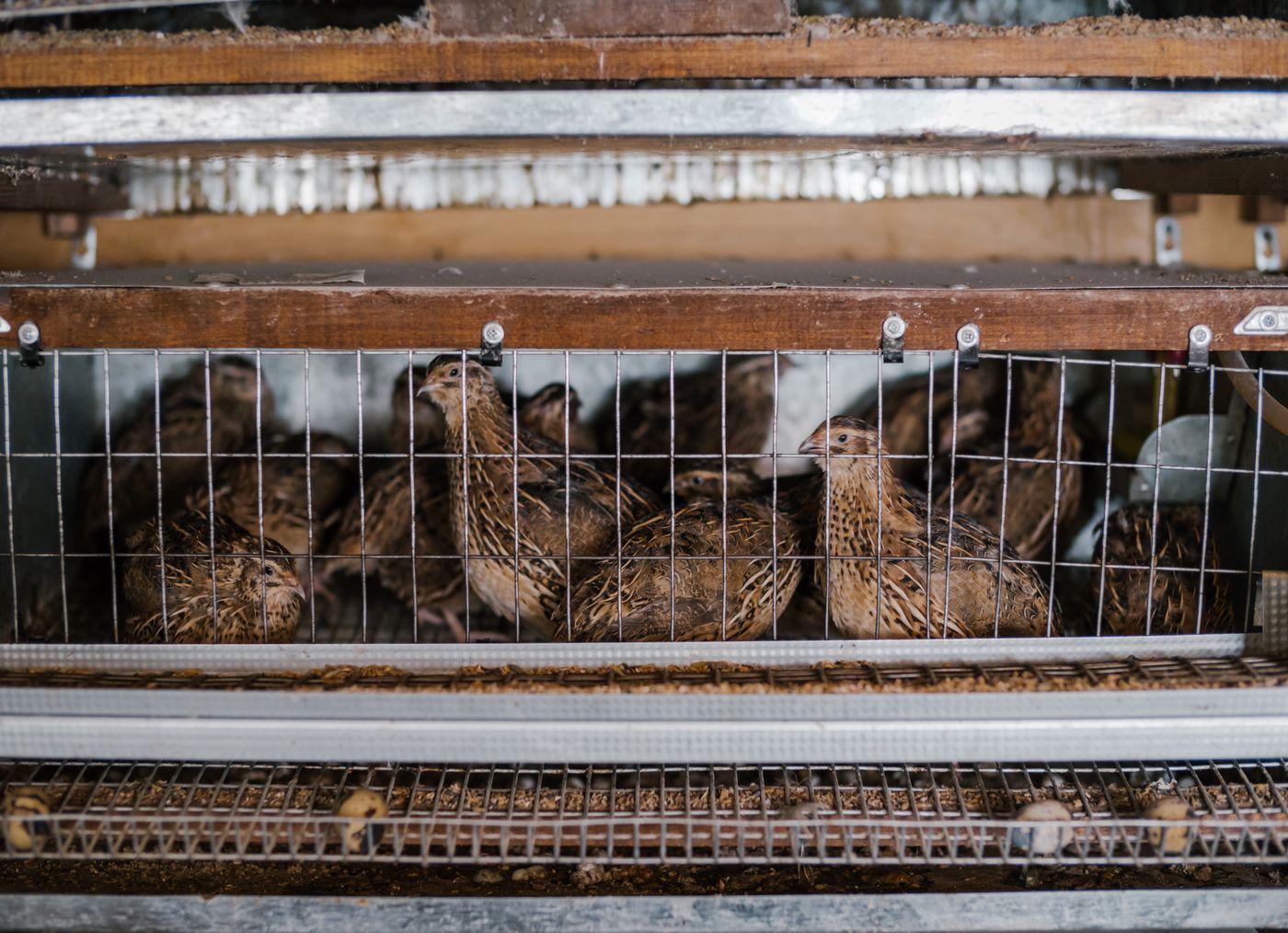
When to get help.
Seek species-appropriate advice for poor growth, rapid weight loss, weakness, leg or toe problems, feather picking, repeated thin shells, a sharp drop in egg production, or several birds changing at once. Feed can be involved, but water failure, disease, parasites, heat, lighting, crowding, and aggression may produce similar signs.
Research-based references
- Mississippi State University Extension: Feeding Quail
- Mississippi State University Extension: Quail Feeding Programs
- Mississippi State University Extension: Feeds and Nutrition
This page focuses on domestic Coturnix. Bobwhite and other game-bird species have different schedules and may be subject to additional regulations.